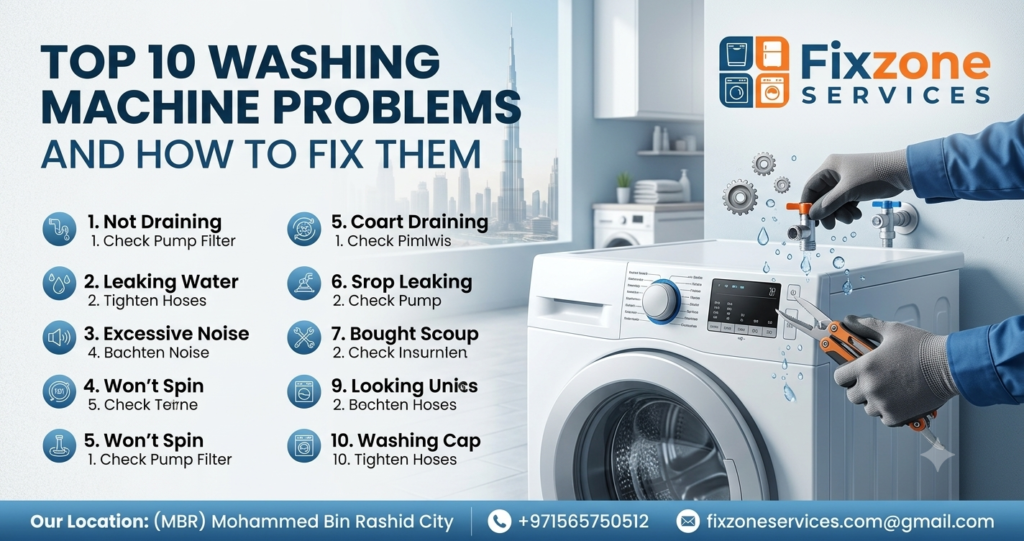
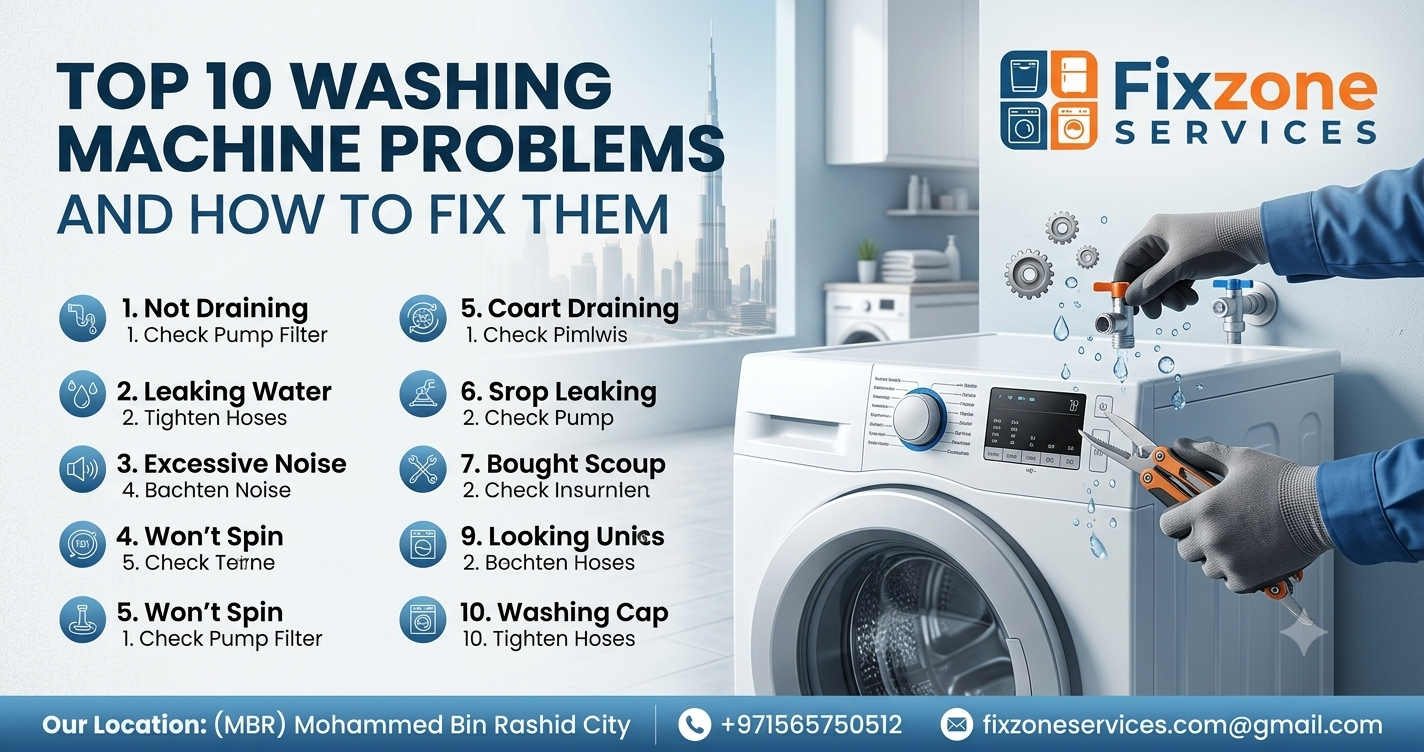
Top 10 Washing Machine Problems and How to Fix Them
A washing machine is one of those household appliances that we rarely think about until something goes wrong. We load our clothes, add detergent, press a few buttons, and expect clean laundry within an hour. But when the machine suddenly refuses to start, leaves clothes soaking wet, makes strange sounds, or leaks water across the floor, it quickly becomes one of the most frustrating problems in the home. The good news is that many common washing machine problems do not require an expensive repair technician. With a little understanding of how your appliance works and some basic troubleshooting, you can often identify and fix the issue yourself.
Modern washing machines are designed with advanced features, sensors, and electronic controls, but they still rely on simple mechanical processes. Water must enter properly, the drum must rotate smoothly, the drain system must remove dirty water, and the control system must communicate correctly with every component. When one part fails, the entire washing process can be affected. Think of your washing machine like a team where every player has an important role; if one player stops working, the whole performance suffers.
This guide explains the top 10 washing machine problems and how to fix them using practical solutions. Whether you own a front-load washer, top-load washer, or a high-efficiency model, these troubleshooting tips can help you save time, avoid unnecessary expenses, and extend the life of your appliance.
Why Washing Machines Develop Common Problems
Washing machines experience problems for many reasons, and most issues develop gradually rather than appearing overnight. Daily use creates wear and tear on important components such as pumps, belts, motors, seals, hoses, and electronic parts. A machine that handles several loads every week is constantly dealing with water pressure, detergent chemicals, heavy clothing, and repeated spinning cycles.
One major cause of washing machine failure is poor maintenance. Many homeowners clean their clothes regularly but forget that the appliance itself also needs cleaning. Detergent residue, fabric softener buildup, mineral deposits from hard water, and trapped moisture can create problems over time. A dirty washing machine can develop unpleasant odors, drainage issues, and reduced cleaning performance.
Another common cause is overloading. Stuffing too many clothes into the drum may seem like a way to save time, but it puts extra stress on the motor, suspension system, and bearings. The machine may struggle to spin properly, vibrate excessively, or fail to clean clothes effectively because water and detergent cannot move freely through the load.
Understanding the reason behind common failures makes troubleshooting easier. Instead of immediately replacing the appliance, you can check simple things first, such as power connections, blocked filters, uneven loads, and damaged hoses. Many washing machine repairs begin with basic inspections that take only a few minutes.
Regular maintenance also plays an important role in preventing problems. Cleaning the drum, checking hoses for cracks, using the correct amount of detergent, and keeping the machine level can significantly improve performance. A small amount of care can prevent major repair costs later.
Problem 1: Washing Machine Won’t Start
One of the most stressful washing machine problems is when the appliance does absolutely nothing after pressing the start button. You may hear no motor sound, see no movement, and notice that the control panel appears inactive. Before assuming there is a serious mechanical failure, check some simple causes first.
The first thing to inspect is the power supply. Make sure the washing machine is properly plugged into the outlet and that the circuit breaker has not tripped. Sometimes a loose connection or temporary power interruption can prevent the machine from operating. If the outlet is not working, test it with another appliance to confirm whether the problem is with the washer or the electrical supply.
Another common reason a washing machine will not start is a door or lid safety issue. Most modern washers include safety switches that prevent operation when the door is open. If the washer door is not closing correctly or the sensor is damaged, the machine may refuse to begin a cycle.
How to Fix a Washing Machine That Won’t Turn On
Start by checking that the power cord is secure and the outlet is functioning properly. If your washing machine has a reset option, disconnect the appliance from power for a few minutes and reconnect it. This can sometimes clear temporary electronic glitches.
Next, inspect the door or lid. Remove any clothing that may be preventing it from closing completely. Clean around the latch area because detergent buildup or debris can interfere with the sensor.
If the machine still does not start, the issue could involve a faulty door lock, control board, timer, or internal electrical component. These repairs usually require professional assistance because they involve electrical testing and replacement parts.
Problem 2: Washing Machine Not Draining Water
A washing machine filled with dirty water after a cycle is one of the most common problems homeowners experience. When water cannot drain, clothes remain soaked, and the machine may refuse to continue spinning. This problem is usually connected to blockages or failures in the drainage system.
The drain pump is responsible for removing water from the drum. Over time, small objects such as coins, buttons, hair, or pieces of fabric can become trapped and prevent the pump from working correctly. A blocked drain hose can create the same problem by stopping water from leaving the machine.
Steps to Fix Drainage Problems
Begin by turning off the washing machine and unplugging it for safety. Check the drain hose behind the appliance and make sure it is not bent, crushed, or clogged. A simple obstruction can prevent proper water flow.
Many washing machines also have a drain filter that collects debris. Cleaning this filter regularly can prevent drainage problems and improve performance. Place a towel or container underneath before opening the filter because trapped water may spill out.
If cleaning the hose and filter does not solve the issue, the drain pump may be damaged. A humming sound without water movement often indicates that the pump is struggling or blocked. In that situation, replacing the pump may be necessary.
Problem 3: Washing Machine Making Loud Noises
Unusual noises from a washing machine should not be ignored. While some sounds are normal during operation, loud banging, grinding, or squealing noises often indicate that something needs attention.
A common reason for noise is an unbalanced load. Heavy items such as towels, blankets, or jeans can collect on one side of the drum and create strong vibrations during spinning. The machine may shake and produce loud knocking sounds.
How to Diagnose and Reduce Washing Machine Noise
Start by stopping the cycle and redistributing the clothes evenly. Avoid washing one large heavy item alone because it can easily create imbalance.
If the noise continues, inspect the machine’s position. A washer that is not level can move excessively and create unnecessary stress on internal parts. Adjust the leveling feet until the appliance sits firmly on the floor.
Persistent grinding or metal-like sounds may indicate worn bearings, damaged suspension parts, or motor problems. These issues usually require repair because continuing to use the machine can cause additional damage.
Problem 4: Washing Machine Not Spinning Properly
When a washing machine does not spin correctly, clothes often come out dripping wet. This problem can happen because of an overloaded drum, drainage failure, belt problems, or motor issues.
The spin cycle depends on several systems working together. The machine must drain water first, the drum must rotate freely, and the motor must generate enough power to reach high speeds.
Fixes for Spin Cycle Issues
Check whether the washer has drained completely. Many machines will not spin if water remains inside the drum. Cleaning the drain system may solve the issue.
Reduce the load size and run another cycle. If the machine spins normally with fewer clothes, overloading was likely the cause.
If the washer still refuses to spin, inspect for broken belts or mechanical failures. Professional repair may be needed for damaged motors or control components.
Problem 5: Washing Machine Leaking Water
Water leaks can quickly become a household emergency because they can damage flooring, walls, and nearby furniture. Finding the source of the leak early can prevent expensive repairs.
Common causes include damaged hoses, loose connections, worn door seals, and excessive detergent use. Front-load washers often develop leaks when the rubber door gasket becomes dirty or damaged.
Ways to Find and Repair Washing Machine Leaks
Check the water supply hoses at the back of the machine. Tighten loose connections and replace hoses that show cracks or signs of aging.
Inspect the door seal for tears, trapped objects, or buildup. Cleaning the gasket regularly helps prevent leaks and odors.
If water appears underneath the machine, the issue may involve the pump, internal hoses, or tub seal. These repairs are more complicated and may require a technician.
Problem 6: Washing Machine Vibrating or Moving Around
A washing machine that walks across the floor during operation is usually experiencing a balance problem. Excessive movement is not only annoying but can also damage internal components.
How to Balance and Stabilize Your Machine
Make sure the machine is placed on a flat surface. Adjust the leveling feet and confirm that all corners are firmly touching the floor.
Avoid overloading the drum and distribute clothes evenly. Using anti-vibration pads can also help reduce movement on slippery surfaces.
Problem 7: Clothes Are Still Dirty After Washing
If your clothes come out looking almost the same as before washing, several factors may be responsible. Poor detergent usage, overloaded loads, dirty drums, and incorrect wash settings can reduce cleaning performance.
How to Improve Washing Performance
Use the recommended amount of detergent and choose the correct cycle for different fabrics. Cleaning the drum regularly removes residue that can affect washing quality.
Problem 8: Washing Machine Smells Bad
A bad smell coming from a washing machine usually develops because moisture, detergent residue, and bacteria remain inside the appliance.
Cleaning Methods to Remove Odors
Run a cleaning cycle with washing machine cleaner or a suitable cleaning solution. Leave the door open after washes to allow moisture to escape.
Problem 9: Washing Machine Taking Too Long to Complete Cycles
Long wash cycles can happen because of water supply problems, sensor issues, or inefficient drainage. Modern machines adjust cycle times based on load size and conditions, but unusual delays may indicate a problem.
Check water pressure, clean filters, and make sure the drain system works properly.
Problem 10: Washing Machine Displaying Error Codes
Error codes help identify problems by showing specific messages on the control panel. Different brands use different codes, so checking the user manual is the best way to understand what each message means.
Some errors relate to drainage, door locks, water supply, or motor problems. Resetting the machine may clear temporary issues, but repeated error codes usually require further investigation.
Conclusion: Keep Your Washing Machine Running Smoothly
A washing machine is a valuable appliance that saves countless hours of household work, but like any machine, it needs proper care. Most common problems, including drainage failures, spinning issues, leaks, strange noises, and bad smells, can often be prevented with regular maintenance and careful use.
Paying attention to early warning signs is the best way to avoid major repairs. A small leak, unusual vibration, or strange sound may seem minor today but could become a costly failure later. Cleaning filters, avoiding overloads, using the correct detergent amount, and keeping the appliance balanced can greatly improve its lifespan.
Frequently Asked Questions About Washing Machine Problems
FAQ 1: How often should I clean my washing machine?
Cleaning your washing machine once a month is generally recommended. Regular cleaning removes detergent buildup, prevents odors, and keeps internal parts working efficiently.
FAQ 2: Why does my washing machine stop during a cycle?
A washing machine may stop because of drainage problems, power interruptions, overheating, sensor issues, or control system errors.
FAQ 3: Can I repair a washing machine myself?
Many simple issues, such as blocked filters, unbalanced loads, and clogged hoses, can be fixed at home. Electrical and major mechanical repairs are better handled by professionals.
FAQ 4: How long does a washing machine usually last?
A well-maintained washing machine typically lasts around 8 to 12 years, although lifespan depends on usage, brand quality, and maintenance habits.
FAQ 5: When should I replace my washing machine?
Replacement may be better than repair when repair costs approach the price of a new machine, when major components fail, or when the appliance becomes inefficient.
FAQ 6: Why is my washing machine not filling with water?
A washing machine may fail to fill with water because of several common issues, including a closed water supply valve, clogged inlet filters, low water pressure, or a faulty water inlet valve. Start by checking that both hot and cold water taps are fully open and that the hoses are not twisted or blocked. Over time, mineral deposits from hard water can build up inside the inlet screens, reducing water flow into the machine. Cleaning these filters may restore normal operation. If the machine still does not fill, the water inlet valve or electronic control system may need inspection by a professional technician.
FAQ 7: Why does my washing machine shake violently during the spin cycle?
A washing machine that shakes aggressively during spinning is usually caused by an unbalanced load or improper installation. Heavy items like blankets, towels, or rugs can collect on one side of the drum, causing the washer to become unstable at high speeds. Make sure the machine is placed on a level surface and that all leveling feet are adjusted correctly. Avoid filling the drum beyond its recommended capacity, as overcrowding prevents clothes from distributing evenly. If the shaking continues even with balanced loads, the suspension rods, shock absorbers, or internal supports may be worn and require replacement.
FAQ 8: Why does my washing machine smell like mold?
A moldy smell usually develops because moisture, detergent residue, and bacteria remain trapped inside the washing machine. Front-load washers are especially prone to odors because their airtight doors can trap humidity inside the drum and rubber gasket. To remove the smell, run a cleaning cycle with a washing machine cleaner or a manufacturer-approved cleaning solution. Wipe the door seal, detergent drawer, and drum area regularly to remove buildup. Leaving the washer door slightly open after each wash allows air circulation and helps prevent mold growth.
FAQ 9: How can I make my washing machine last longer?
Extending the lifespan of your washing machine requires regular maintenance and proper usage habits. Avoid overloading the drum because excessive weight puts stress on the motor, bearings, and suspension system. Use the correct amount of detergent because too much soap can create residue buildup and affect performance. Clean the drum, detergent drawer, and filters regularly to prevent blockages and unpleasant odors. Inspect water hoses every few months for cracks or leaks and replace old hoses before they fail. Small maintenance steps can help your washing machine operate efficiently for many years.
FAQ 10: Why is my washing machine door locked and won’t open?
A locked washing machine door is often a safety feature that prevents water from spilling out during or immediately after a cycle. If the machine has recently finished washing, wait a few minutes because some models keep the door locked until the water temperature and drum movement are safe. If the door remains locked, the washer may still contain water because of a drainage problem. Check the drain filter and remove any blockage. A faulty door lock mechanism or control board issue may also prevent the door from unlocking and could require professional repair.
FAQ 11: Why is my washing machine using too much water?
Excessive water usage can happen because of incorrect settings, faulty sensors, or problems with the water control system. Modern high-efficiency washing machines are designed to use less water, so a noticeable increase in water consumption may indicate a problem. Check whether you are selecting the correct wash cycle because some programs naturally use more water than others. If the machine continues filling beyond the normal level or does not stop filling, the water inlet valve or pressure sensor may be malfunctioning.
FAQ 12: Why does my washing machine leave detergent marks on clothes?
Detergent stains often appear when too much detergent is used, when the washing machine is overloaded, or when the detergent does not dissolve properly. Cold water cycles can sometimes make powder detergent dissolve poorly, leaving white residue on fabrics. Use the recommended detergent amount and avoid filling the drum too tightly. Cleaning the detergent dispenser regularly can also prevent old detergent buildup from mixing with fresh laundry.
FAQ 13: Why does my washing machine make a burning smell?
A burning smell from a washing machine should never be ignored because it may indicate overheating or an electrical problem. Possible causes include a worn motor, damaged belt, overloaded drum, or electrical component failure. Turn off and unplug the machine immediately if you notice a strong burning odor. Avoid continuing to use the appliance until the source has been identified, as operating a damaged washer could create additional problems or safety risks.
FAQ 14: How often should washing machine hoses be replaced?
Most manufacturers recommend replacing washing machine hoses every three to five years, even if they appear to be working correctly. Rubber hoses can weaken over time due to water pressure, temperature changes, and aging materials. A cracked or damaged hose can suddenly burst and cause significant water damage. Upgrading to reinforced stainless steel braided hoses can provide additional durability and reduce the risk of unexpected leaks.
FAQ 15: Why does my washing machine drain but not complete the cycle?
A washing machine that drains but does not finish the cycle may have problems with sensors, the control board, motor operation, or cycle settings. Sometimes the machine pauses because it detects an imbalance or an issue that prevents safe operation. Try resetting the washer by disconnecting it from power for a few minutes. If the problem happens repeatedly, check the error code display or consult the manufacturer’s troubleshooting guide to identify the specific cause.
FAQ 16: Can hard water damage a washing machine?
Yes, hard water can affect washing machine performance over time. Minerals such as calcium and magnesium can build up inside hoses, heating elements, detergent dispensers, and internal components. This buildup may reduce efficiency, increase energy consumption, and shorten the appliance’s lifespan. Using a washing machine cleaner designed for mineral deposits or installing a water softener can help protect the machine in areas with hard water.
FAQ 17: Why does my washing machine smell like sewage?
A sewage-like smell usually indicates a problem with drainage, trapped residue, or bacterial buildup. A clogged drain hose, dirty filter, or improperly installed drain pipe can allow unpleasant odors to move back into the washer. Clean the drain filter, run a maintenance wash, and check that the drain hose is positioned correctly. If the smell continues, the issue may involve the household drainage system rather than the washing machine itself.
FAQ 18: Is it cheaper to repair or replace a washing machine?
The decision depends on the age of the appliance, the repair cost, and the severity of the problem. Minor repairs such as replacing hoses, pumps, or door seals are usually worth fixing. However, major failures involving the motor, transmission, or control board can become expensive, especially on older machines. If your washing machine is more than 8 to 10 years old and requires a costly repair, replacing it may provide better long-term value.
FAQ 19: How do I reset my washing machine?
Resetting a washing machine depends on the brand and model, but a common method is disconnecting the appliance from power for five to ten minutes and then plugging it back in. Some machines have a dedicated reset function accessible through specific button combinations. A reset can clear temporary electronic errors, but it will not fix mechanical problems such as damaged pumps, broken belts, or leaking seals.
FAQ 20: What maintenance should I perform on my washing machine regularly?
Regular maintenance keeps a washing machine efficient and reduces unexpected breakdowns. Clean the detergent drawer, wipe the door gasket, inspect hoses, and clean the drain filter according to the manufacturer’s recommendations. Run a cleaning cycle every month, avoid overloading the drum, and use the correct detergent amount. These simple habits reduce wear and help your washing machine deliver reliable performance for a longer period.