Introduction
A washing machine that suddenly stops working can throw your entire household into chaos. The question that follows is almost always the same: should you call a technician, or is it time to buy a new unit? Deciding to repair or replace your washing machine isn’t always straightforward, and making the wrong call can cost you hundreds of dollars. At Fixzone Services, we help homeowners make this decision every day, and in this guide, we’ll walk you through exactly how to evaluate your appliance so you can choose the option that makes the most financial and practical sense.
Signs It’s Time to Repair or Replace Your Washing Machine
Before you decide whether to repair or replace your washing machine, it helps to recognize the warning signs your appliance is giving you. Common red flags include:
- Loud banging, grinding, or squealing noises during the cycle
- Water leaking from the machine during operation
- Clothes coming out still soiled or excessively wrinkled
- The drum not spinning or draining properly
- Error codes appearing repeatedly on digital displays
- Unusual vibrations or the machine moving out of place
If you’re noticing one or more of these symptoms, it’s a strong signal that your machine needs professional attention — and possibly a permanent replacement.
The 50% Rule: A Simple Way to Repair or Replace Your Washing Machine
One of the easiest ways professionals decide whether to repair or replace a washing machine is the “50% rule.” This rule states that if the cost of repair exceeds 50% of the price of a new machine, replacement is usually the smarter financial choice.
For example, if a new washing machine costs $600 and your repair estimate comes in at $350 or more, replacing the unit will likely save you money in the long run — especially since older machines are more prone to future breakdowns.
How Age Affects Your Decision to Repair or Replace a Washing Machine
Age is one of the most important factors when deciding whether to repair or replace your washing machine. According to appliance longevity data from <cite index=”0-1″>Consumer Reports, washing machines typically last around 10 to 14 years, with front-loading models expected to last for about 11 years and top-loading models for about 14 years.</cite>
As a general guideline:
- Under 5 years old: Repair is almost always the better option.
- 5–8 years old: Repair is usually still worthwhile, unless the cost is very high.
- 8–10+ years old: Replacement often makes more sense, especially for major component failures.
- 10+ years old: Strongly consider replacing, as parts availability and efficiency decline significantly.
Energy Efficiency: Another Reason to Replace Your Washing Machine
Older washing machines consume significantly more water and electricity than newer ENERGY STAR-certified models. Upgrading isn’t just about avoiding repairs — it’s also about long-term savings. Certified efficient washers use less water and energy per cycle compared to older, less efficient models, according to the U.S. Environmental Protection Agency’s ENERGY STAR program.
If your current machine is over eight years old, replacing it could reduce your utility bills considerably, making the decision to repair or replace your washing machine less about the immediate repair cost and more about long-term value.
Common Washing Machine Problems and Whether They’re Worth Repairing
Not all issues are created equal. Here’s how Fixzone Services typically evaluates common problems when helping customers repair or replace their washing machine:
Minor Issues (Usually Worth Repairing)
- Faulty door latch or lid switch
- Clogged drain hose or pump filter
- Worn drive belt
- Malfunctioning water inlet valve
Major Issues (Often Better to Replace)
- Cracked or leaking drum
- Failed motor or transmission
- Extensive electronic control board damage
- Persistent leaks from multiple internal components
If your machine is experiencing multiple major issues at once, replacement is typically the more cost-effective and stress-free solution.
Cost Comparison: Repair vs. Replace Washing Machine
When weighing whether to repair or replace your washing machine, consider these average cost ranges:
| Factor | Repair | Replace |
|---|---|---|
| Average Cost | $150–$400 | $500–$1,200 |
| Lifespan Extension | 1–3 years | 10–14 years |
| Energy Savings | Minimal | Significant |
| Warranty | Limited (parts/labor) | Full manufacturer warranty |
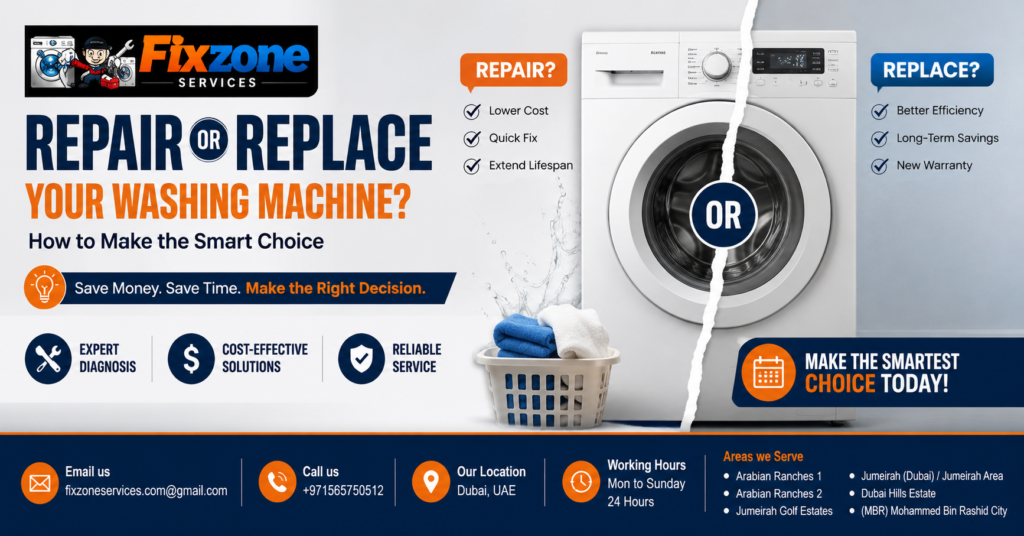
While repairs are cheaper upfront, replacement often delivers better long-term value, particularly for machines nearing the end of their expected lifespan.
Why Choose Fixzone Services for Your Washing Machine Repair
At Fixzone Services, our certified technicians assess every appliance individually before recommending whether you should repair or replace your washing machine. We provide:
- Transparent, upfront repair estimates
- Genuine replacement parts
- Same-day service in most cases
- Honest advice — even if that means recommending a replacement instead of a repair
Our goal isn’t just to fix machines; it’s to help you make the most cost-effective decision for your household.
Frequently Asked Questions
1. How do I know if my washing machine is worth repairing? If your machine is under eight years old and the repair cost is less than 50% of a new unit’s price, repairing is usually the better choice.
2. What is the average lifespan of a washing machine? Most washing machines last between 10 and 14 years with proper maintenance, though this varies by brand and usage.
3. Is it cheaper to repair or replace a washing machine? Repairs are typically cheaper upfront, but replacement can offer better long-term savings through improved energy efficiency and reduced future breakdowns.
4. Should I repair or replace a washing machine that’s leaking? Minor leaks from hoses or valves are usually repairable. However, leaks from the drum or internal tub often indicate a bigger problem that may justify replacement.
Final Verdict: Should You Repair or Replace Your Washing Machine?
Ultimately, the decision to repair or replace your washing machine comes down to three key factors: the age of the unit, the cost of repair relative to a new machine, and the severity of the problem. If your washer is relatively new and the issue is minor, repair is almost always the smarter choice. But if you’re facing major repairs on an aging, inefficient machine, replacement will likely save you money and hassle in the long run.
Not sure which option is right for you? Contact Fixzone Services today for a professional inspection and honest recommendation — because a well-informed decision starts with expert advice.